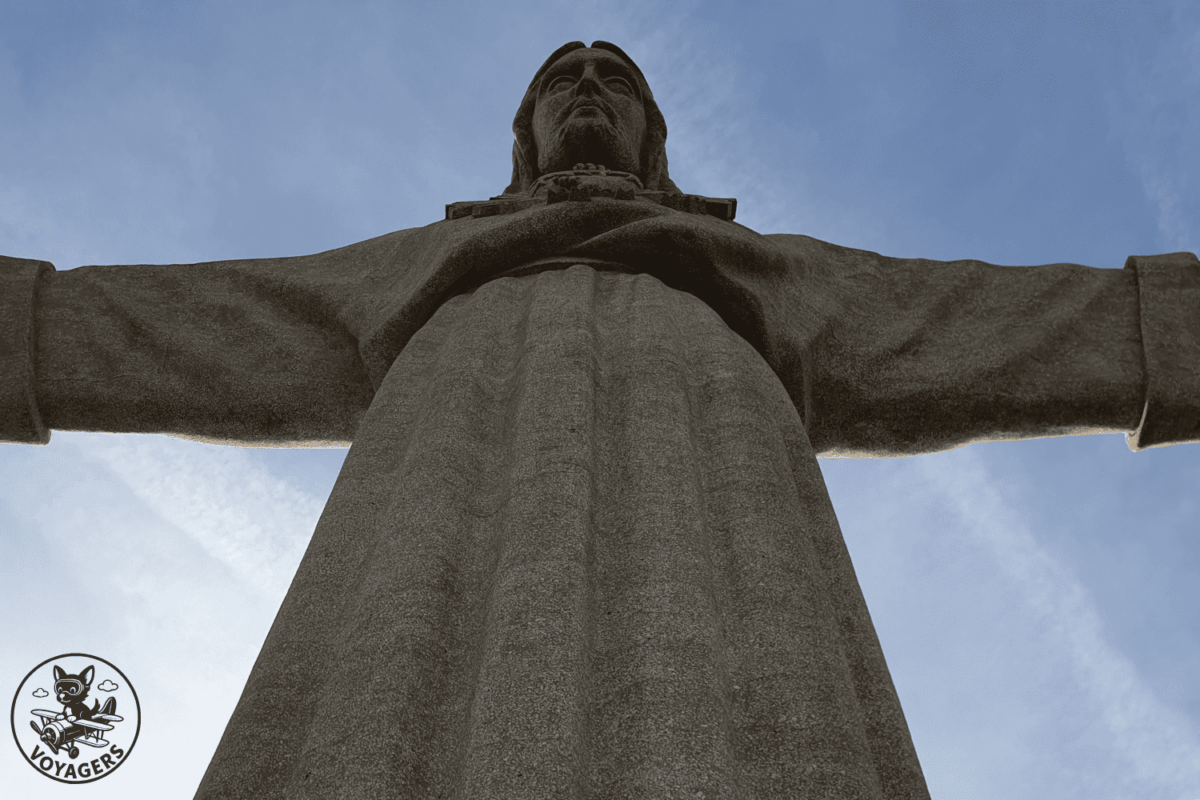
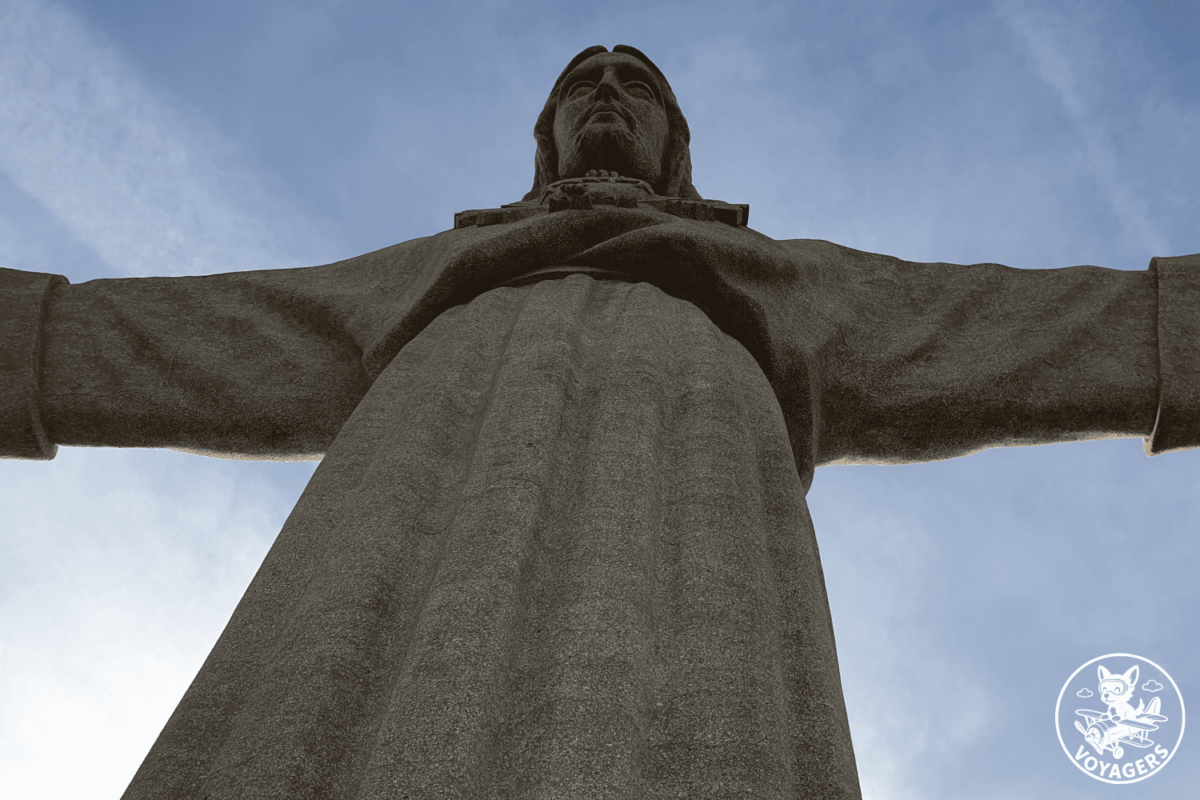
Cristo Rei near Lisbon first commands attention with its monumental silhouette, arms open above the Tagus. From there, it dominates the Pragal hill in the municipality of Almada. The monument stands on the south bank of the river, facing Lisbon.
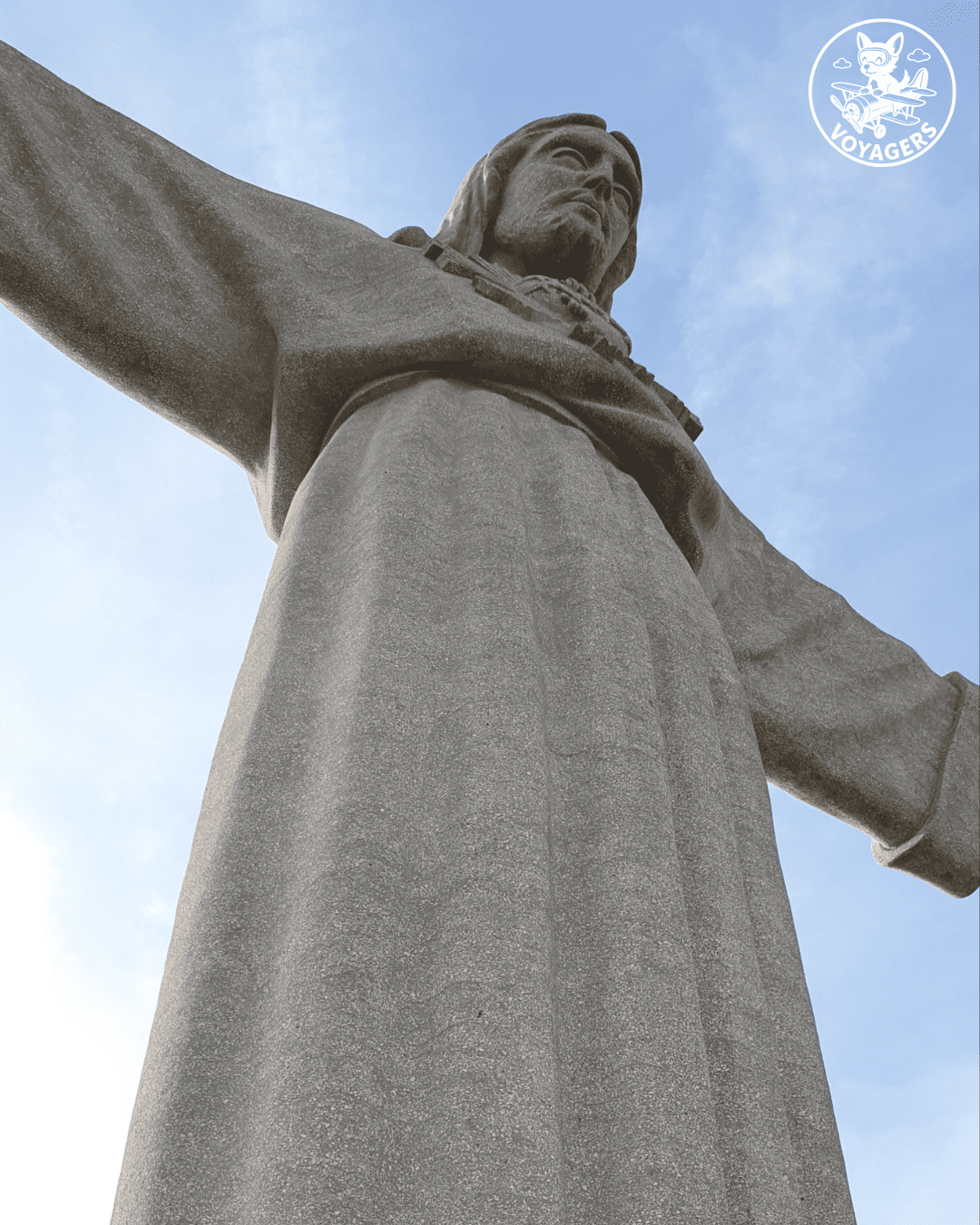
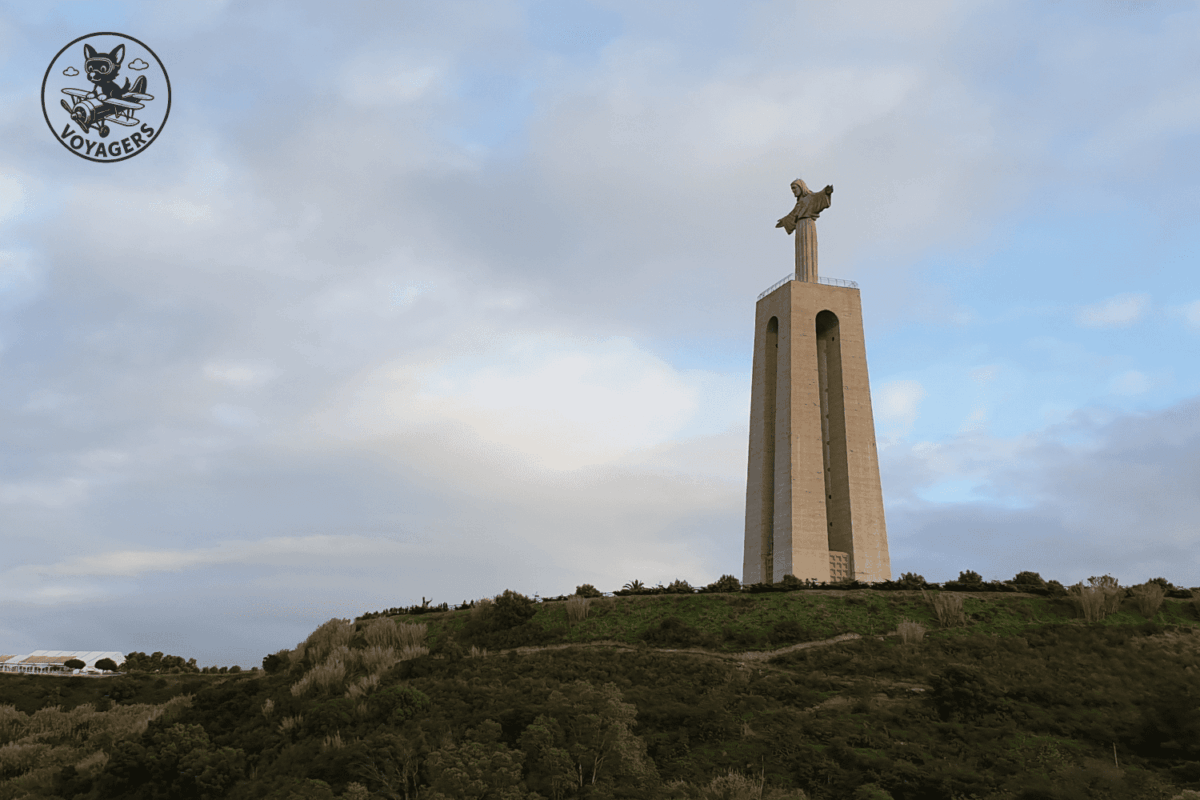 Cristo Rei of Almada facing Lisbon.
Between the lift, the viewpoint and the view of the 25 de Abril Bridge, the visit unfolds in several stages. Meanwhile, each level offers a different perspective over Lisbon, the Tagus and the hills of Almada.
Discovering Cristo Rei
A monument born from a wartime vow
The idea for Cristo Rei dates back to October 1934. That year, Dom Manuel Gonçalves Cerejeira flew over Rio de Janeiro. At the time, the Cardinal-Patriarch of Lisbon was returning from the International Eucharistic Congress in Buenos Aires.
As a result, the sight of Christ the Redeemer overlooking the bay inspired him deeply. He then wished to build a monument to the Sacred Heart of Jesus facing Lisbon.
The Portuguese episcopate supported the project, which gained national importance in 1937. Three years later, the Second World War spread across Europe.
Therefore, the Portuguese bishops met in Fátima and made a vow. If Portugal escaped the conflict, a great monument to Christ would rise above Lisbon.
Portugal remained neutral and did not participate directly in the fighting. Gradually, Cristo Rei became a symbol of national gratitude for the peace the country had preserved.
Consequently, a major fundraising campaign took place throughout Portugal to finance its construction. In addition, children contributed through the “Pedras Pequeninas”, or “Little Stones”, campaign. This collection ran from 1939 to 1958.
The land was acquired in 1941. However, the foundation stone was laid only on 18 December 1949. Two years later, work on the foundations began.
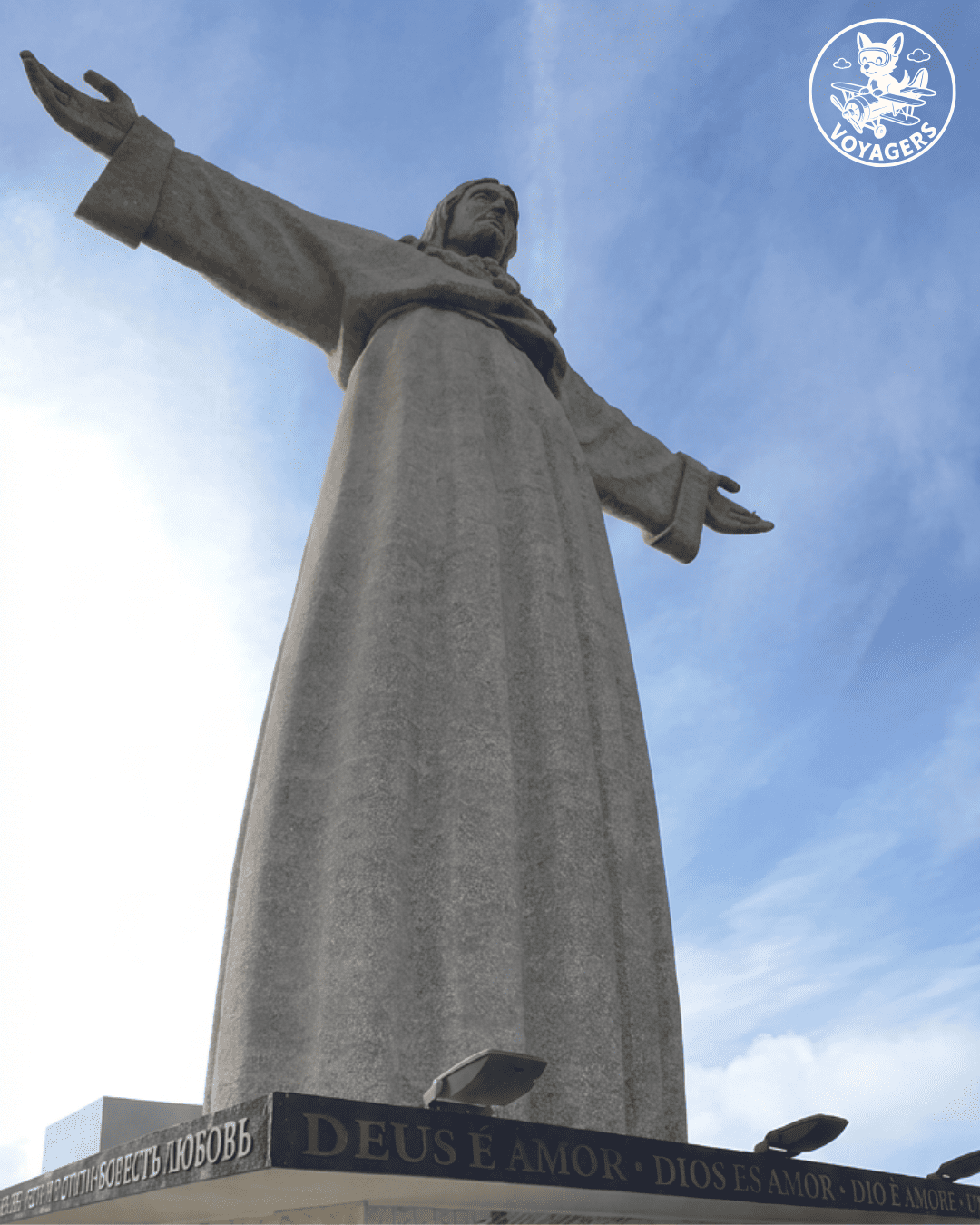
 God is love inscription at Cristo Rei of Almada.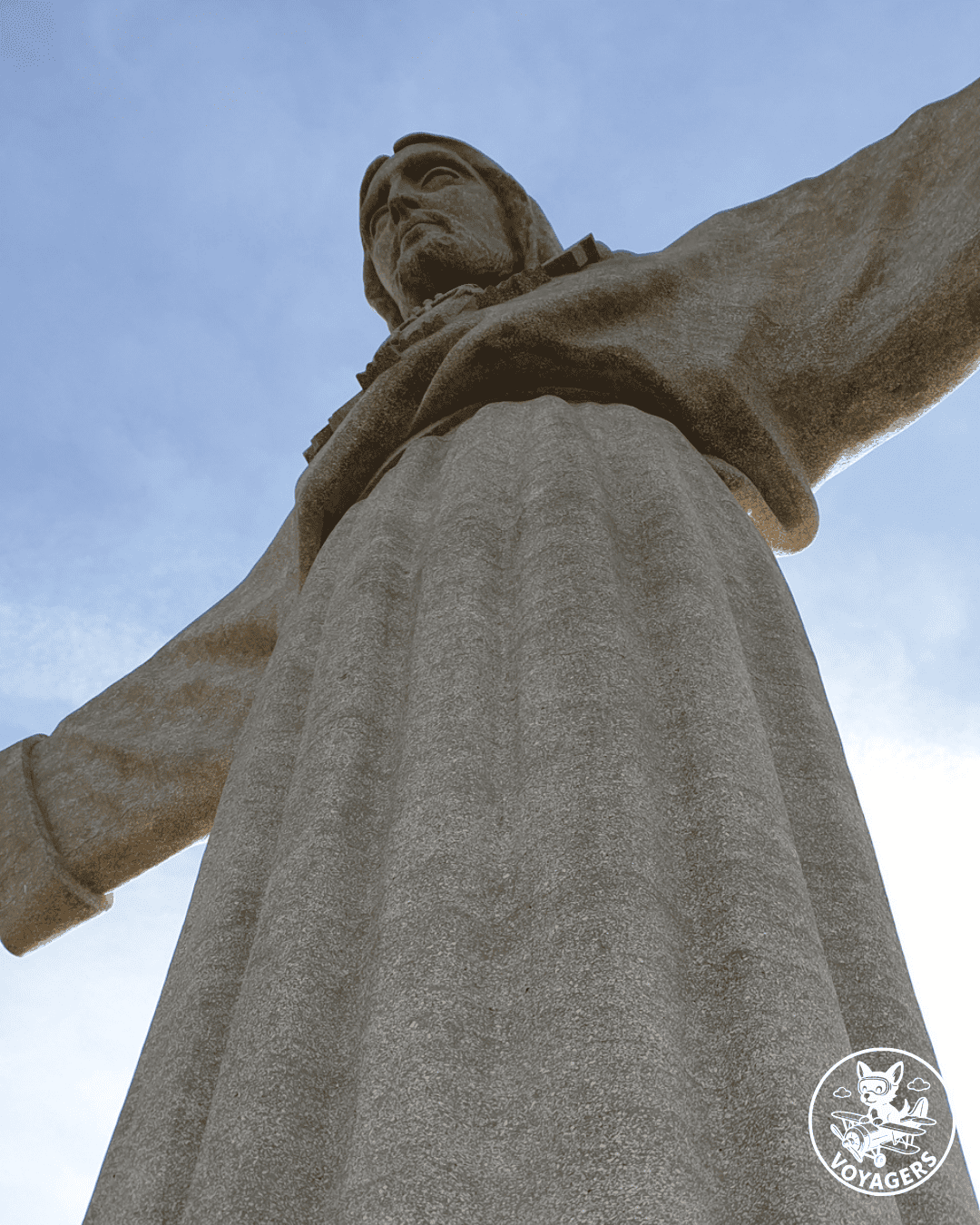
From the foundation stone to the inauguration
From 1952, the great reinforced-concrete portico started to rise. Moreover, its construction required mobile formwork, allowing the structure to grow progressively, layer by layer.
Overall, the entire construction weighs approximately 40,000 tonnes. The statue was built directly on top of the portico. First, plaster moulds were prepared from a scale model. The artists then sculpted it by hand, more than one hundred metres above the ground. Sculptor Francisco Franco de Sousa created the statue. Architect António Lino designed the portico with engineer Francisco de Mello e Castro.
After almost ten years of construction, Cristo Rei was inaugurated on 17 May 1959, Pentecost Sunday. On that day, the ceremony gathered the Portuguese episcopate, several cardinals and approximately 300,000 people. Pope John XXIII participated symbolically through a radio message.
A viewpoint over Lisbon and the Tagus
Cristo Rei reaches a height of 110 metres. Its pedestal measures 82 metres, while the statue itself stands 28 metres tall. The monument ranks among Portugal’s most imposing structures.
Located at a height of around 84 metres, the viewpoint offers a unique panorama. Consequently, its perspective differs from the miradouros in central Lisbon.
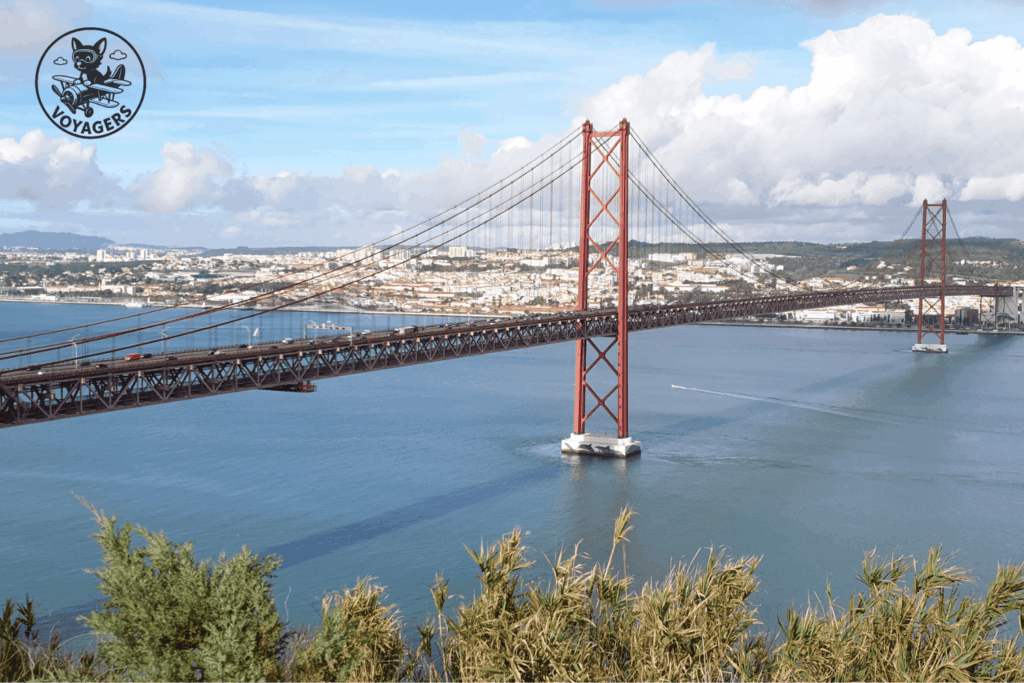
Your gaze first settles on the 25 de Abril Bridge. Its deck seems to pass almost directly below the sanctuary. Beyond the bridge, the Tagus, Lisbon’s riverfront and the capital’s hills stretch into the distance. On a clear day, several historic districts appear in the distance. In addition, you may see São Jorge Castle and the Serra de Sintra.
The panorama extends far beyond Lisbon. On the other side, the view opens over Almada. Moreover, it encompasses much of the Setúbal Peninsula. When visibility is good, you can see the Serra da Arrábida and Cape Espichel. According to the sanctuary, therefore, this panorama can extend for approximately twenty kilometres.
From the gardens, the complete monument already comes into view. Higher up, the terrace completely changes the scale of the landscape. As a result, the Tagus resembles a vast bay, while cars crossing the bridge appear tiny.
This height gives the site a spectacular yet peaceful atmosphere. Meanwhile, the bustle of central Lisbon lies only a few kilometres away.
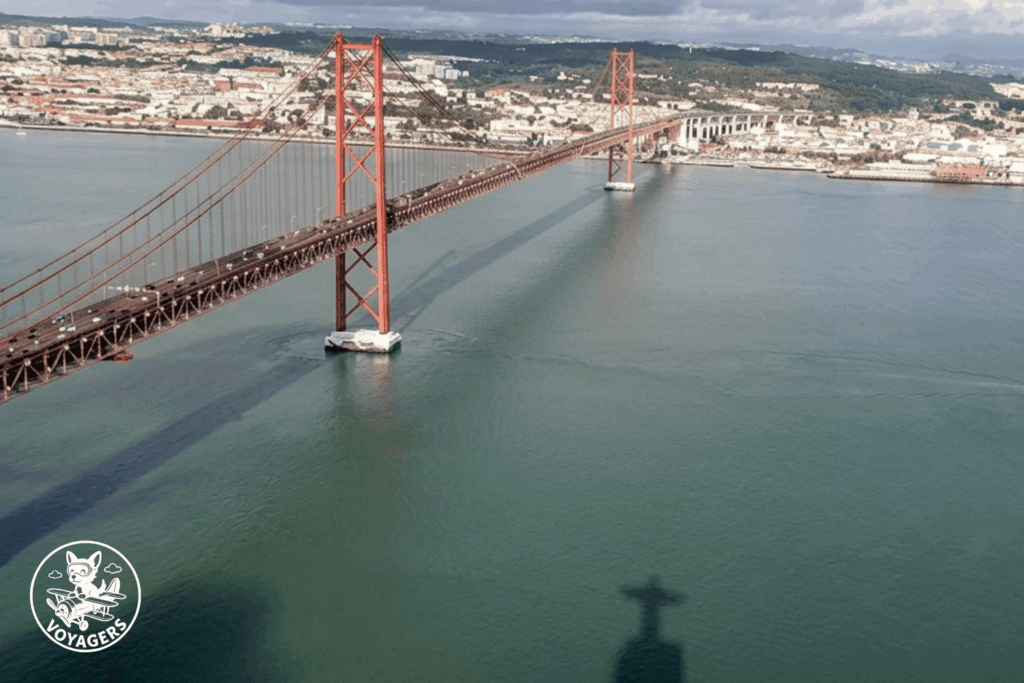
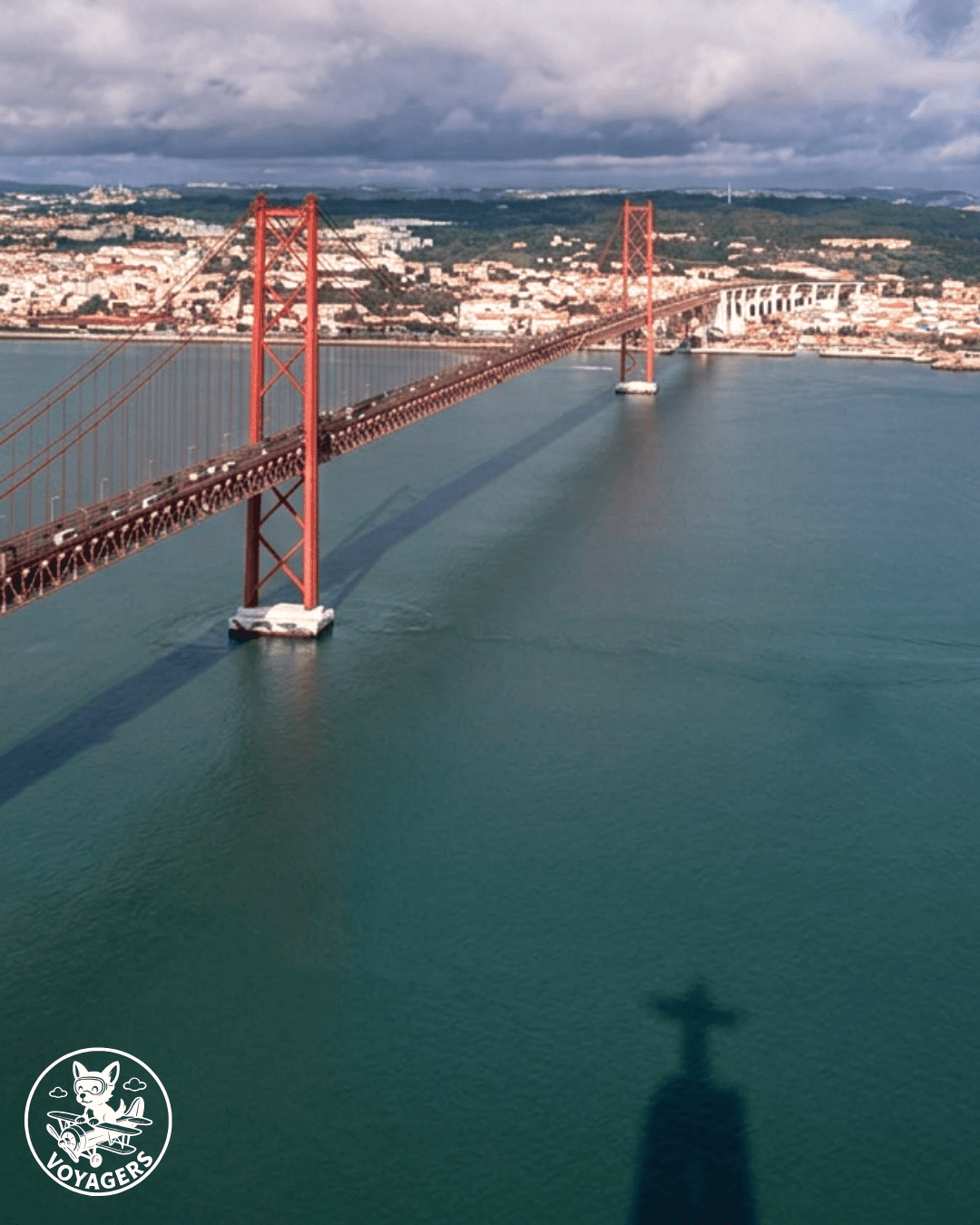 View of the 25 April Bridge from Cristo Rei of Almada.
My experience at Cristo Rei in Almada
Arriving beneath a vertiginous monument
As you arrive at the foot of the Santuário do Cristo Rei, the building immediately impresses with its vertical scale. Indeed, you have to look a long way up to see Christ at the summit, arms open towards Lisbon.
A lift inside the base takes visitors to the monument’s upper levels. However, it does not lead directly to the viewpoint. Finally, the ascent continues along a relatively narrow spiral staircase of 74 steps. Consequently, the upper terrace is not accessible to wheelchair users. Once outside, you suddenly leave the monument’s interior and find yourself suspended above the Tagus.
The best angles for photographs
The most striking effect comes as you step onto the upper viewpoint. On one side, the 25 de Abril Bridge stretches across the water. Meanwhile, the hills of Lisbon rise behind it. In clear weather, the Vasco da Gama Bridge may sometimes appear in the distance. Then, turn around and the full height of the statue comes into view. Seen from below, it quite literally towers over visitors.
From the gardens, take a few steps back to photograph the entire monument. The sky and clouds then frame its open arms.
A sanctuary beyond the panorama
Above all, Cristo Rei remains a genuine sanctuary. In addition, a chapel dedicated to Our Lady of Peace stands at its base. Despite the tourist crowds, the complex retains an atmosphere of contemplation. The gardens around the portico provide welcome shade, especially during the hottest hours.
Planning your visit
Access and practical organisation
Cristo Rei stands in Almada, on the south bank of the Tagus. From Lisbon, you can cross the 25 de Abril Bridge by car. Another option is the ferry between Cais do Sodré and Cacilhas. Afterwards, a bus or taxi takes you to the sanctuary. Moreover, the boat crossing provides a beautiful view of the monument from the river.
As with Cristo Rei in Garajau, Madeira, access to the grounds and gardens is free. However, reaching the observation platform beneath Christ’s arms requires a ticket. The lift costs a few euros, with reduced rates for children and seniors. Therefore, check prices and opening hours before travelling, as they vary by season.
When and how to visit
Light can transform the experience. Late in the day, the setting sun illuminates Lisbon and the 25 de Abril Bridge. As a result, the landscape takes on particularly warm colours. In the morning, the light feels softer and the site is generally quieter.
Wear comfortable shoes for exploring the gardens. During high season, bring a little patience too. The lift can attract a queue at the busiest times.
Who will enjoy this site?
Cristo Rei will appeal to travellers drawn to major monuments, panoramic views and meaningful places. Furthermore, the visit provides an excellent opportunity to explore Almada and the south bank of the Tagus. Ultimately, these areas reveal a view of Lisbon that you will find nowhere else.
FAQ about Cristo Rei near Lisbon
The monument stands in Almada, on the south bank of the Tagus. It faces Lisbon beyond the 25 de Abril Bridge.
Cristo Rei was inaugurated on 17 May 1959, after ten years of construction.
Sculptor Francisco Franco de Sousa created the statue. Architect António Lino designed the portico supporting it.
A lift inside the base provides access to the upper levels. Visitors must then climb 74 steps to reach the viewpoint beneath Christ’s arms.
Yes, the site offers a remarkable view of Lisbon and the 25 de Abril Bridge. Moreover, the ferry journey to Cacilhas already enriches the experience.
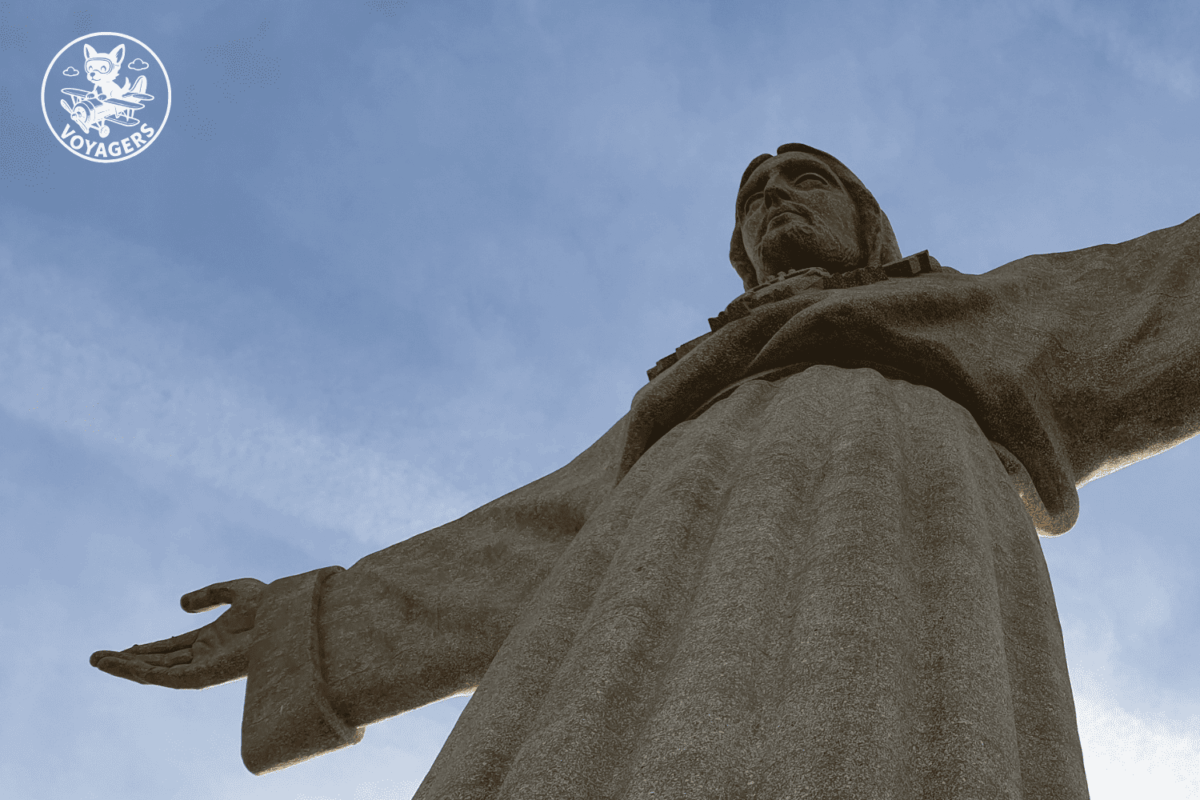 Close view of Cristo Rei of Almada.