At first glance, it seems like it’s always been there. The Eiffel Tower rises proudly above the Seine. It watches over the rooftops of Paris. Today, it’s one of the most photographed and most visited monuments in the world. But did you know that for a long time, Parisians hated it? Here is the astonishing story of this great Iron Lady, a tale of scandal, genius, and triumph.
A Birth Under High Tension
It’s 1884. Paris is preparing to host the 1889 World’s Fair, marking the centenary of the French Revolution. The city wants a monument that will amaze the world. Gustave Eiffel and his team propose a daring project: a 300-meter tower made entirely of iron. When it is completed in 1889, it becomes the tallest human-made structure in the world. For more than 40 years, it would remain the tallest structure in the world.
But not everyone is impressed. Many famous artists and writers strongly oppose the project. They call the future tower a “skeleton of iron,” a “tragic streetlamp,” and even a “monstrous factory chimney.”
The Rise of a Myth
Despite the backlash, construction began in 1887. Workers, perched without harnesses, assembled the structure piece by piece. They handled over 18,000 metal parts, fixed with 2.5 million rivets. The construction progressed at an exceptional pace: it took only two years, two months, and five days to complete. In just over two years, the unimaginable became reality: the tallest human-made structure soared into the Parisian sky.
On March 31, 1889, Gustave Eiffel himself climbed the 1,710 steps (the elevator wasn’t yet operational) to proudly plant the French flag at the top.
A Monument Saved by Science
Originally scheduled to be dismantled after 20 years, the tower was saved by a stroke of genius: Gustave Eiffel proposed equipping it with telecommunications devices. During World War I, it was used to intercept enemy messages. Later, it became a radio and television transmitter.
Science saved its life. And Paris gained a legend.
Secrets and Anecdotes of the Iron Lady
Gustave Eiffel had an office at the top: he received scientists and notable guests there, including Thomas Edison. Since the year 2000, the Eiffel Tower sparkles every evening for five minutes at the start of each hour, thanks to the 20,000 light bulbs installed for this magical show.
In 1923, a journalist rode a bicycle down the tower! The police arrested him, but his stunt became legendary. The color of the tower changes: maintenance teams repaint the Eiffel Tower every 7 years, applying three shades of brown—darker at the base, lighter at the top.
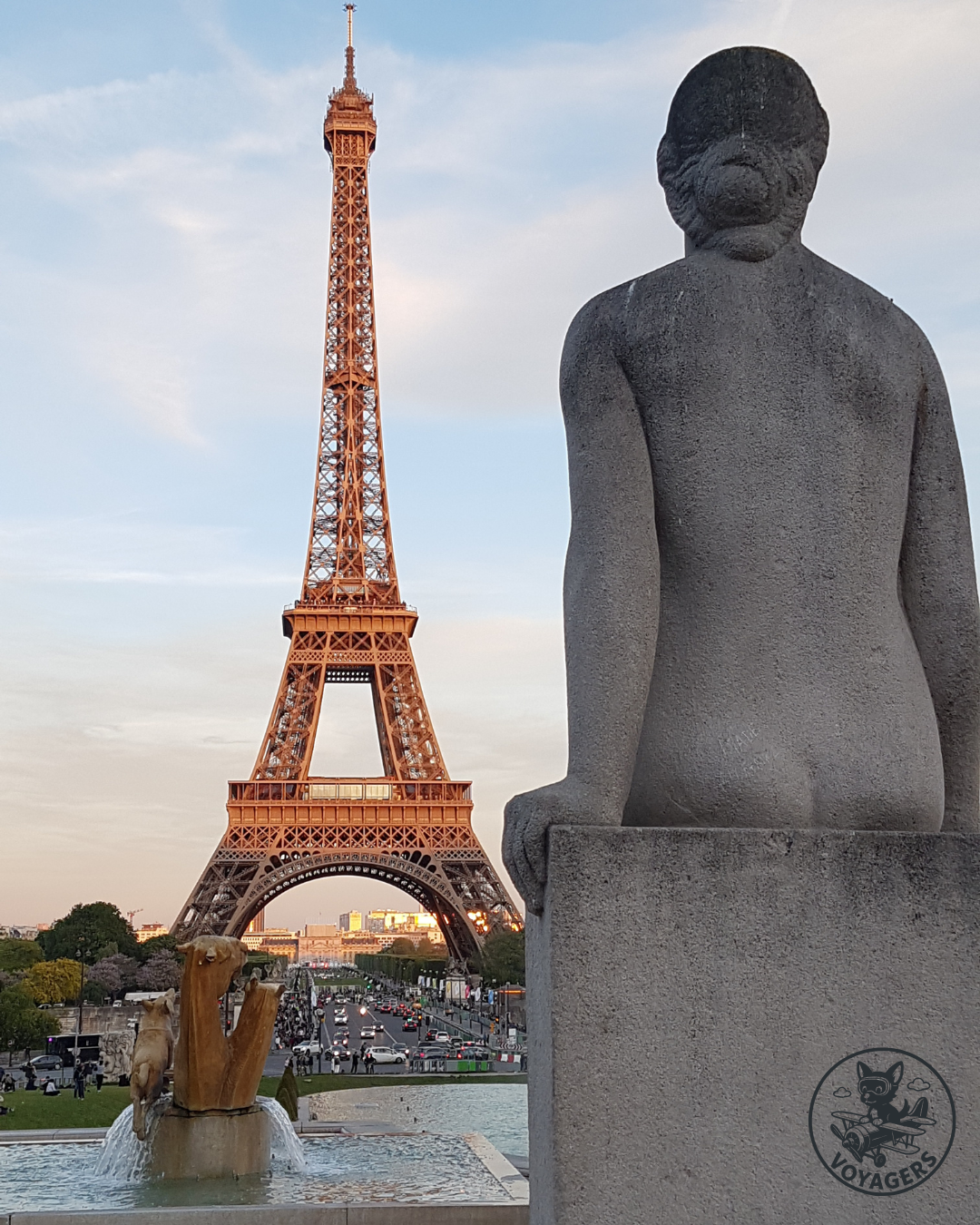 The Eiffel Tower – front view
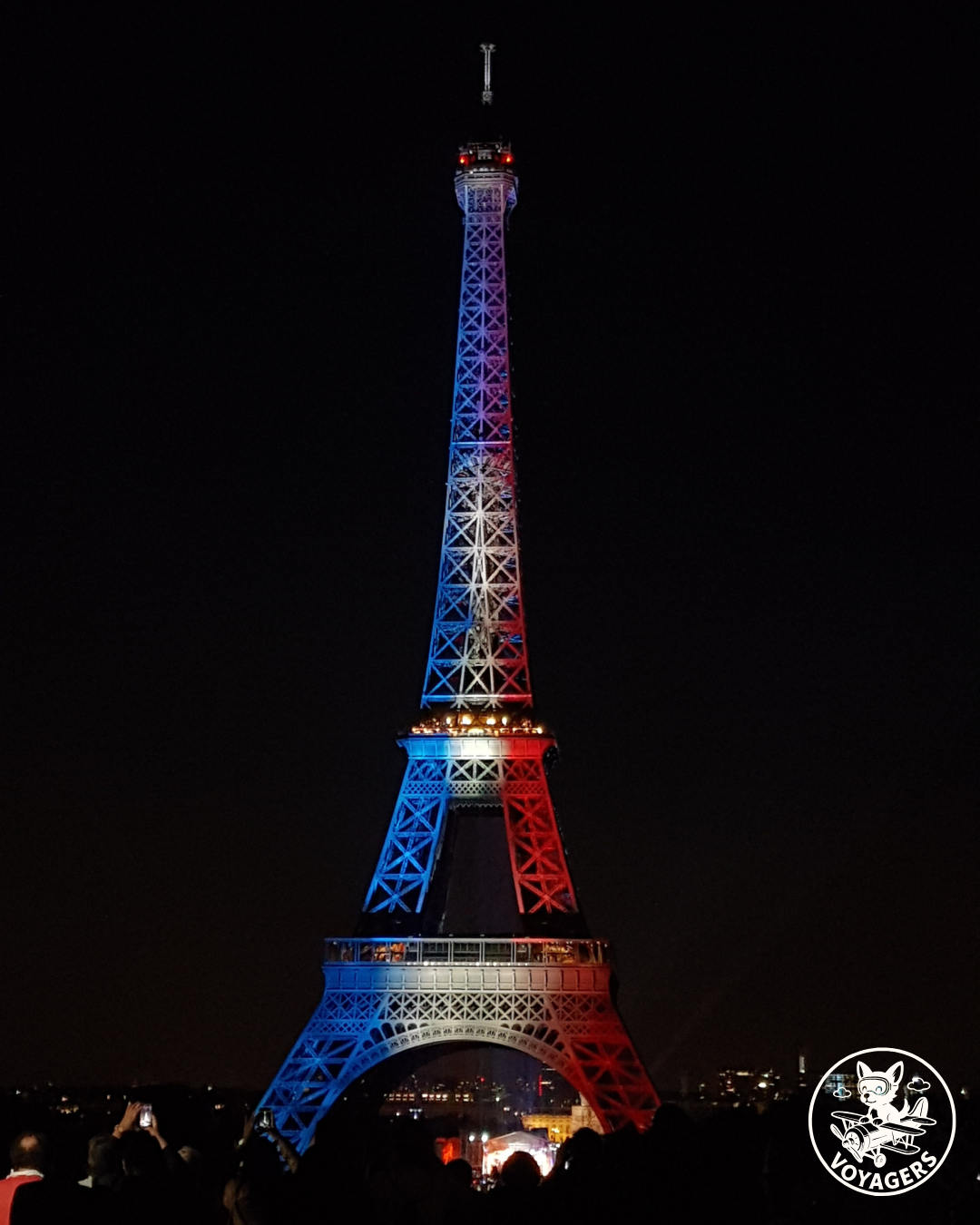 The Eiffel Tower – blue, white, and red
From Hated Tower to Global Star
Every year, nearly 7 million visitors from around the world ascend the Eiffel Tower, making it one of the most visited paid monuments in the world. It offers breathtaking views of Paris from its three levels, including the summit at 276 meters above ground.
The Eiffel Tower appears in countless films, advertisements, and even emojis. It embodies romance, elegance, and the grandeur of France. Yet it took time, courage, and a touch of madness for it to become one of the greatest symbols in the world.
Planning to see the Iron Lady in person? Check the official opening hours and ticket prices before your visit.
Frequently Asked Questions About the Eiffel Tower
The Eiffel Tower is nicknamed the “Iron Lady” because of its imposing iron structure and its elegant silhouette above Paris. The name also reflects its strength, longevity, and status as one of France’s most recognizable monuments.
The Eiffel Tower in Paris is the famous monument commonly known as the “Iron Lady,” or La Dame de Fer in French.
Yes. When it was completed in 1889, the Eiffel Tower became the tallest human-made structure in the world. It held this record until 1930, when the Chrysler Building was completed in New York.
The Eiffel Tower is 330 meters tall, including its antennas. Its highest observation platform, accessible to visitors, is approximately 276 meters above the ground.
The Eiffel Tower was originally intended to remain standing for only 20 years. It was preserved because it proved useful for scientific experiments, radio transmissions, and military telecommunications. These new functions ultimately saved it from demolition.
The Eiffel Tower is made of puddled iron rather than steel. Its structure consists of more than 18,000 metallic parts assembled with approximately 2.5 million rivets.